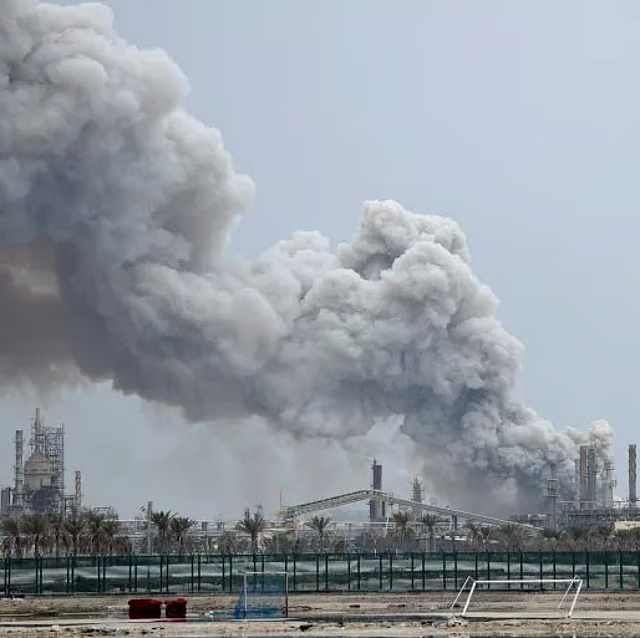
Fujairah, Bahrain, Hormuz, production cuts: the energy map is starting to look like a stress fracture.
Reports say Iran again attacked oil terminals in Fujairah in the UAE and an oil pumping plant in Bahrain. At the same time, warnings around the Strait of Hormuz are intensifying, Saudi Aramco is reportedly reducing output at two oil fields, and rhetoric around infrastructure targeting is getting much sharper. This is how a regional war starts punching the global economy in the throat.
Fujairah matters because it is not some decorative port on a brochure. It is a critical logistics node tied to storage, bunkering, and energy movement in the Gulf. Bahrain matters because even limited disruption to pumping infrastructure amplifies the message that energy assets are on the menu. You do not need every strike to be catastrophic. You just need enough risk to make insurers, traders and governments start moving nervously.
The Strait of Hormuz sits over all of this like a giant economic tripwire. If flows through that corridor are heavily disrupted, the result is not just higher oil. It is higher transport cost, higher input cost, broader goods inflation and a nasty chain reaction through economies already fragile from previous shocks.
That is why comments from figures like Putin about Hormuz-linked production risk, and remarks from Trump about having a plan for oil spikes, matter even when details are thin. They signal that the energy side of this crisis is no longer a side issue. It is one of the main boards on which the game is being played.
Ex Insider’s read: the market does not need total collapse to panic. It only needs enough repeated blows to infrastructure, shipping routes and production confidence that everyone starts pricing in uglier possibilities. Once that starts, inflation does the rest of the dirty work.